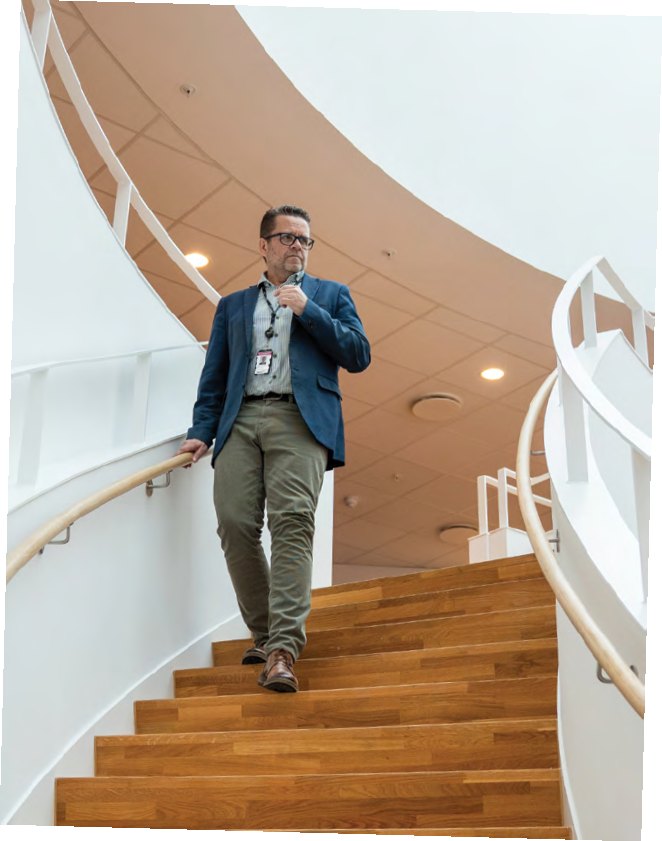
Lars Scheibel joined NCC as a site engineer in 1995. Three decades later, he serves as Country Manager of NCC Denmark and Director of NCC Building Denmark, overseeing a portfolio that contributed to NCC Building Nordics’ record results in 2025. Along the way, he watched the industry move from paper drawings and faxed tender documents to BIM models and PowerBI dashboards. His conclusion after 30 years is not about which tool changed everything. It is about what tools are for.
The case for uniformity and standardisation
NCC is one of the Nordic region’s largest contractors. That scale, Lars argues, is only an advantage if you use it consistently.
“Why do it differently if you can do it the same?”
When every department follows the same processes and platforms, the gains multiply: onboarding becomes faster, knowledge transfer improves, governance tightens.
It is a philosophy at odds with how many construction companies operate. Across the industry, confidence in project data remains stubbornly low, not only because of technical gaps, but because of inconsistent ways of working. Lars sees standardisation as the antidote.
“We’re constantly working on making things more uniform. Systems, processes, programmes. If we agreed to do it a certain way, then that’s how we should do it.”
Decisions, not dashboards
Standardisation is not an end in itself but the foundation for something Lars cares about more: the quality of decisions. NCC’s digital infrastructure spans the full breadth of operations: pipeline and tender management, safety reporting, financial tracking, sustainability accounting. Lars uses PowerBI dashboards extensively, but he is careful to distinguish between reporting and decision-making.
“You’re allowed to have personal experience. You’re allowed to have a feeling. But then you look at the data. The data is where you find your knowledge. That’s the fundamental premise for our decisions.”
He offers a concrete example. Over the past few years, NCC Denmark’s accident frequency has dropped significantly, partly through cultural change on sites, but equally through data. By analysing incident reports digitally, the team identified that a disproportionate number of accidents occurred on access routes.
“You could see it in the data. So you invest your effort there. The data tells you where to act.”
“Digitalisation helps define a clear basis for decisions, so you can prioritise your efforts. The era of using gut feelings is over.”
The progress tracking gap
But good decisions require good inputs, and there is one domain where Lars sees room for significant improvement across the industry. Ask him where the greatest unrealised potential lies, and his answer is immediate: progress tracking. Despite the extensive digitalisation of models, cost systems and safety platforms, measuring physical progress on site with high precision and real-time transparency remains an area with clear untapped potential.
“The industry should be able to tell a client: it will be ready on the 24th. Not just ‘in the spring.’ And to say that with documented certainty, because the data supports it.”
The ambition is not his alone. Across Europe, construction professionals increasingly expect real-time synchronisation between models and site to become standard within the next few years. Lars is pragmatic about the timeline but clear about the direction.
“If you can track progress with precision and combine it with historical benchmarks, you don’t just improve one site. You improve every future estimate. That’s the scale advantage.”
The change culture problem
If data is Lars’s ally, change is his adversary. Not digital change. Design change. The persistent habit of altering decisions mid-construction, even after formal lock points, remains one of the industry’s most stubborn friction sources. And it directly undermines the progress tracking Lars is chasing: every uncontrolled change resets the clock on reliable forecasting.
“Digital tools help you implement changes faster. But you can’t just move a lamp and forget to check what’s behind the wall or above the ceiling. When you change something, you must change it consistently, 100% in the models, so you can see every consequence.”
His solution is not technological. It is sequential: invest earlier. Front-load the process with competence and coordination so fewer problems survive into the construction phase.
“I am absolutely convinced it doesn’t get more expensive. It prevents expensive problems later.”
Green accounting as a governance tool
The same logic of early investment and continuous tracking applies to an area where NCC sees digital maturity as a competitive advantage: sustainability. With building regulations tightening CO₂ thresholds at each revision, Lars describes green accounting as a parallel track alongside time and cost, that is monitored continuously and not calculated at the end.
“Imagine building a beautiful building and then not getting the keys because you exceeded your CO₂ ceiling. That’s not hypothetical. If you don’t track it throughout, including all the energy consumed on the building site, you risk exactly that.”
Not afraid
Standardisation, data-driven decisions, progress tracking, front-loading, green accounting: it adds up to a single conviction: that construction can be governed. When asked whether he fears the pace of change, Lars is unequivocal.
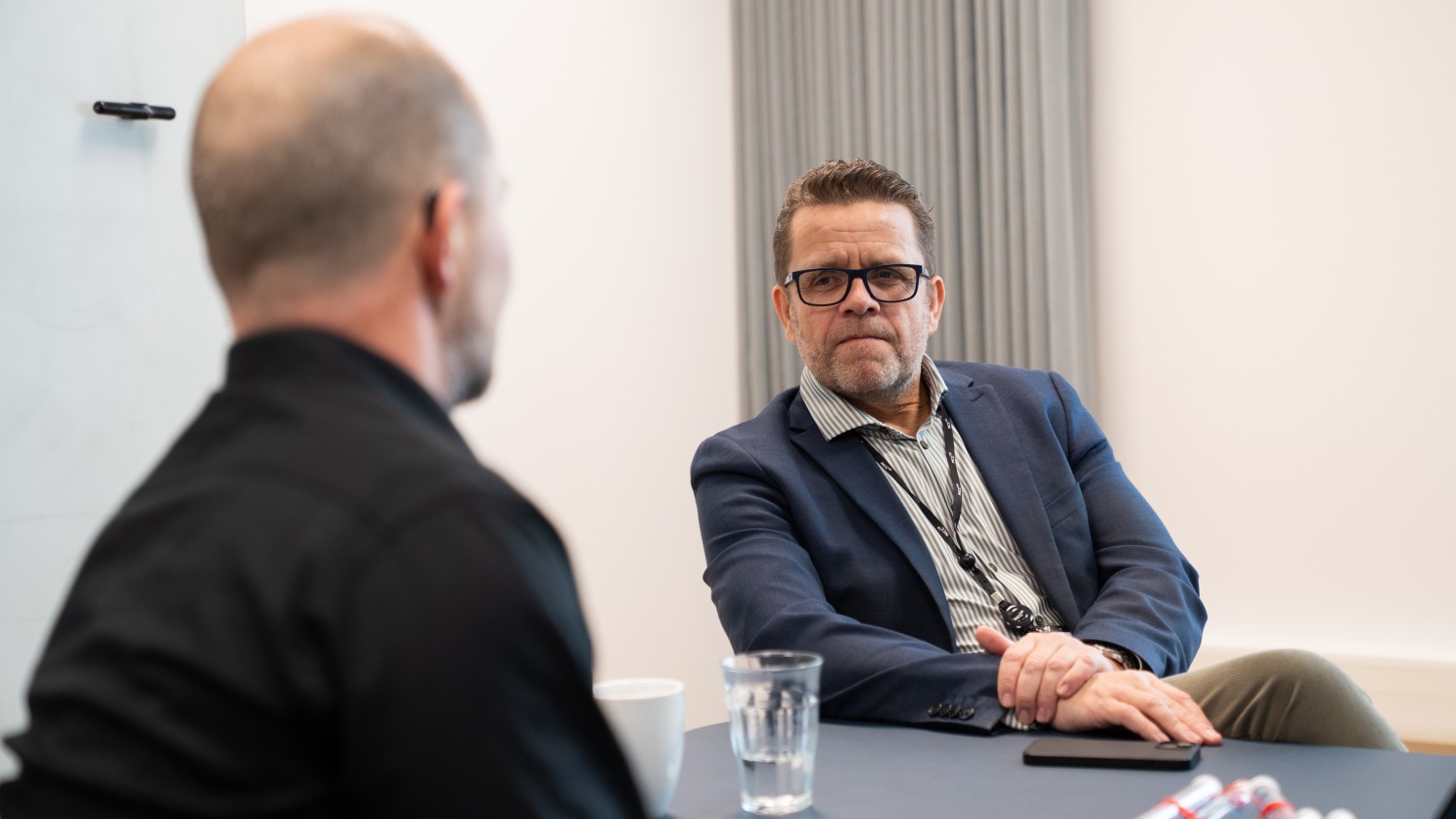
“Not at all. If you look back through history, every time people were afraid of a new technology, they absorbed it, adapted, and made it work. Radio. Television. Computers. The internet. Every single time, we navigated through it.”
It is a fitting perspective from someone who has watched the industry move from handwritten schedules to AI-assisted design. Lars expects the next decade to bring automated excavation, robotic concrete construction, and compressed timelines. But the principle stays the same: the tool serves the decision, never the other way around.
This article originally appeared in ONSIGHT Magazine Issue #01 2026, the magazine for digital transformation in the construction industry, published by Vitus. Download the full magazine for free. More from ONSIGHT: Architecture Must Rediscover Its Purpose.