Lars Fuhr Pedersen is Vice President, Heavy Civil Projects for Major Public Clients at COWI. With 36 years of experience spanning contractor, technical director at Sund & Bælt, and senior adviser on major Danish and international infrastructure projects, he is one of the most experienced voices in Nordic civil engineering.
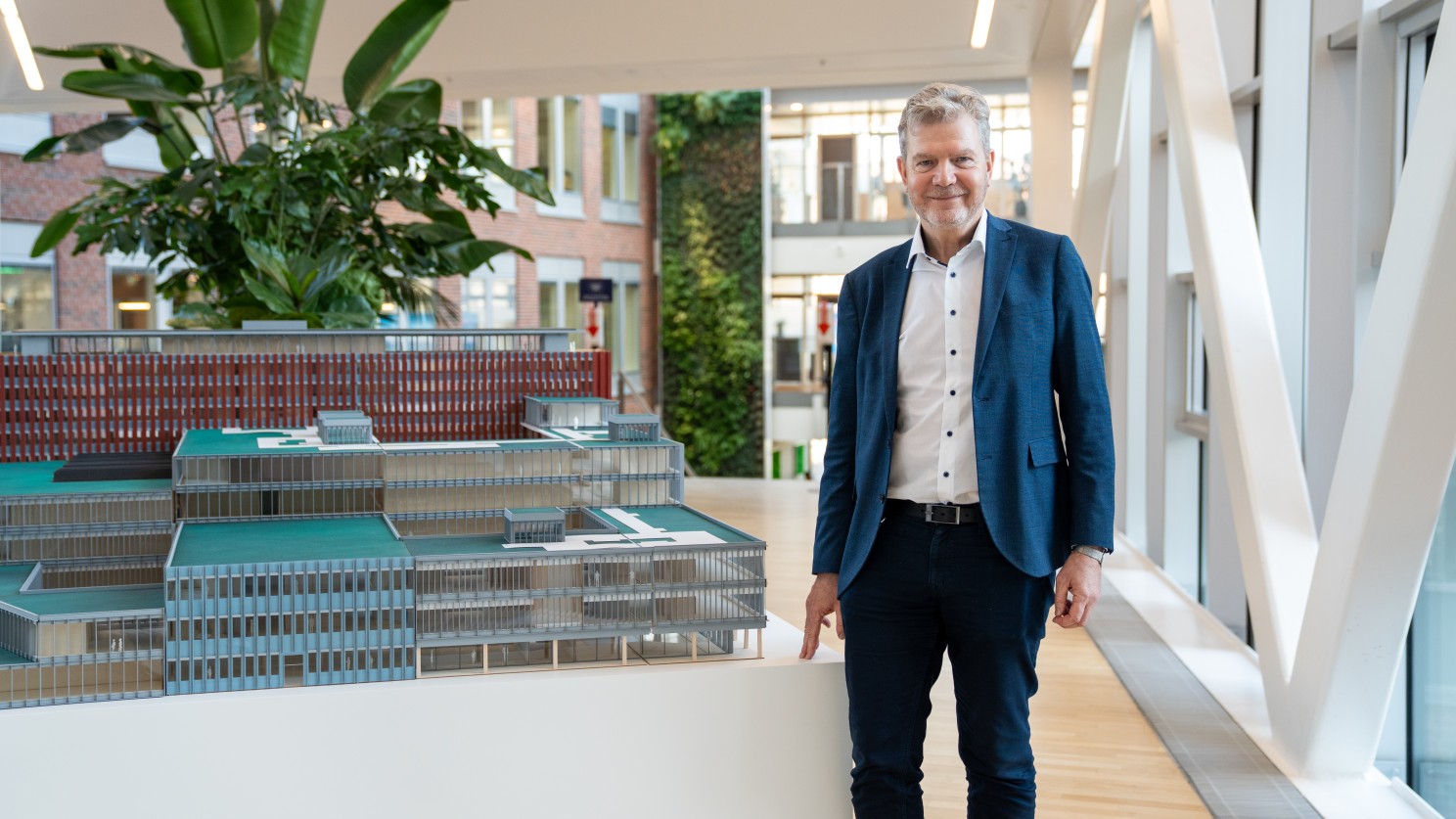
Lars Fuhr Pedersen has built bridges, owned them, and now advises on some of the world’s largest. That full-circle perspective shapes everything about how he reads data, risk and leadership in the infrastructure industry.
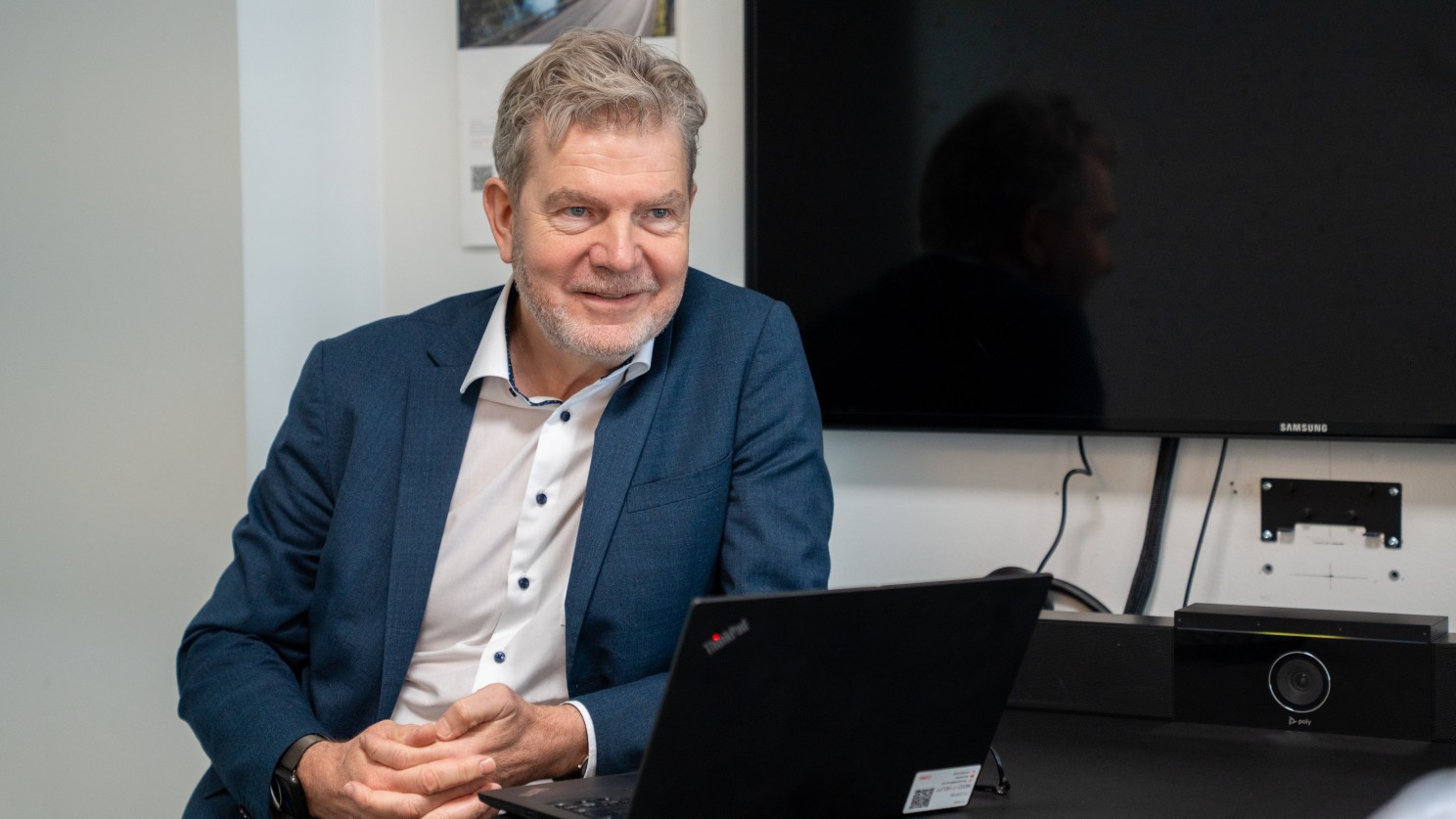
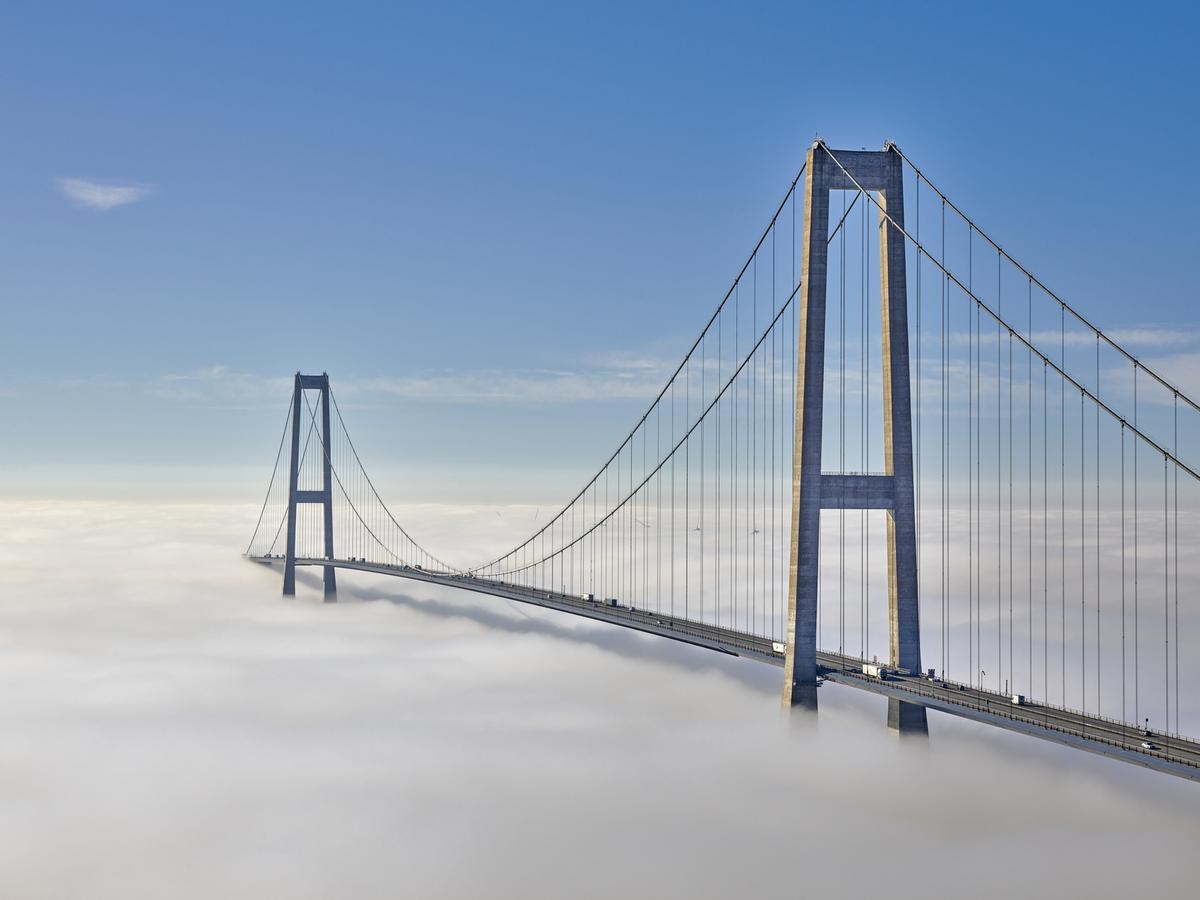
In 1989, Lars Fuhr Pedersen drove to a construction site on the southern coast of Zealand and started his first day as an engineer on the Great Belt project. He was young, working for a joint venture with French, American and German partners, and the task in front of him was straightforward in ambition and enormous in scale: help build a fixed link across one of Europe’s busiest shipping straits. Almost a decade later he was back on the water, this time mounting the superstructure of the Øresund High Bridge piece by piece.
He has stayed in that world ever since. Today, as Vice President, Heavy Civil Projects for Major Public Clients at COWI, Pedersen oversees a portfolio of 130 to 150 infrastructure projects across Denmark, Sweden and internationally. COWI is currently working on some of the world’s most ambitious structures, including the Fehmarnbelt Fixed Link, set to become the world’s longest immersed tunnel, and a recently won project on the Subway in New York City. The scale has grown considerably. The fundamental questions, he says, remain the same.
Three roles, one industry
What sets Pedersen apart from many in senior advisory roles is that he has occupied every seat at the table. Twenty-five years as a contractor gave him an instinct for execution: budgets, buildability, what happens when a weld fails or the weather turns against a schedule. Then, in 2015, he moved to become Technical Director at Sund & Bælt, the owner and operator of the Storebælt and Øresund connections, responsible for keeping infrastructure alive across decades rather than delivering it on a handover date. Three years ago, he made his latest transition, joining COWI as Vice President, Heavy Civil Projects for Major Public Clients.
That sequence was deliberate. He wanted to understand the full arc of a structure’s life. As a contractor, you take part in the construction process and see the final structure. As an owner, you inherit the structure, and discover everything the construction process did not prepare for the operations & maintenance.
The mechanical and electrical systems are buried in a bridge deck. The maintenance cost of a detail that looked acceptable on paper in 1994. The gap between design intent and operational reality, visible only after years of use. As an owner, Pedersen saw this firsthand, and it permanently changed how he reads a project at any stage. As a consultant on projects, he now brings all three lenses to every brief.
The long tail of every decision on infrastructure projects
The move to Sund & Bælt changed his relationship with data just as much as it changed his relationship with structures. Working closely with large infrastructure owners such as Vejdirektoratet, Banedanmark and Metroselskabet, Pedersen was part of an owner community that was serious about using data to manage assets over time. The question was always the same: what do we know, and is it reliable enough to act on?
His assessment, then and now, is that the industry’s confidence in its own data has been lower than it could be. He connects this to something cultural. Engineers working on bridges and tunnels carry an acute awareness of consequence. A miscalculation is a physical reality, permanent and costly. That caution is a genuine strength, but it can also make organisations slow to embrace new tools, AI included, with the confidence those tools deserve.
At COWI today, he uses drones and AI-assisted image recognition for structural inspection, reaching surfaces that were previously expensive and dangerous to access. He is enthusiastic about the capability and insists on pairing it with what he calls a healthy scepticism.
“We have to be fully accountable for what we hand over to the client. AI helps us get there faster. It does not take the responsibility away.”
AI platforms sometimes offer answers with more confidence than the evidence supports, and in an industry where structures must stand for a hundred years, that gap carries real weight.
Knowledge that outlasts the engineer
The question Pedersen returns to most readily is organisational: how do you turn a large portfolio of completed projects into a living source of intelligence for the next one? COWI has been involved in landmark structures for decades. That accumulated knowledge exists, held in models, records and in the memory of engineers now approaching retirement. The challenge is making it systematically accessible rather than incidentally inherited.
He describes the current state of the industry in terms of silos. A typical project today runs a BIM model, a finite element model and an asset management model largely in parallel, with limited flow of information between them. Drone imagery generates a fourth layer. Each contains valuable knowledge. The opportunity, as he sees it, is to connect them, so that what a bridge teaches you about its own behaviour over forty years of operation feeds back into how you design the next one.
He is measured about timelines. Earlier in his career, in a mentoring role at MT Højgaard, he watched colleagues be too optimistic about the pace of transformation. His conviction about the direction, though, is firm.
The data processing capacity available today, combined with the scale of BIM and asset data being generated on major projects, has created conditions that were simply unavailable five years ago. The organisations that build the internal infrastructure to use that knowledge will be the ones defining how this industry operates.
The same job, done differently
When asked whether his job will exist in ten years, Pedersen answers without hesitation. Engineering will be asked to do more, at a higher level. When welding robots arrived at the Great Belt tunnel element precast factory back in 1990, the prediction was displacement. What actually happened was that jobs were upskilled. People adapted, and the industry absorbed the technology on its own terms.
He expects something comparable ahead. Better data and more capable AI will free engineers to focus on the decisions that genuinely require human judgement: which risk matters, which trade-off to make, which solution holds up across a hundred-year lifespan.
“When you drive across Storebælt and think: how hard can it be to do maintenance and sweep the road, you have no idea what is underneath that surface.”
The tool changes. The responsibility does not.
He has four sons, between 24 and 34, and the question of automation and the future of work comes up at home. His answer to them is the same as his answer in a professional context. The industry will need people who understand the full arc of what they are building. People who have stood on a High Bridge over the water contributing to welding the bridge spans together can therefore read a model with the weight of that experience behind them. Thirty-six years in, that is still what he brings to the table.
This article originally appeared in ONSIGHT Magazine Issue #01 2026, the magazine for digital transformation in the construction industry, published by Vitus. Download the full magazine for free. More from ONSIGHT: Data Doesn’t Care About Your Gut Feeling and Architecture Must Rediscover Its Purpose.