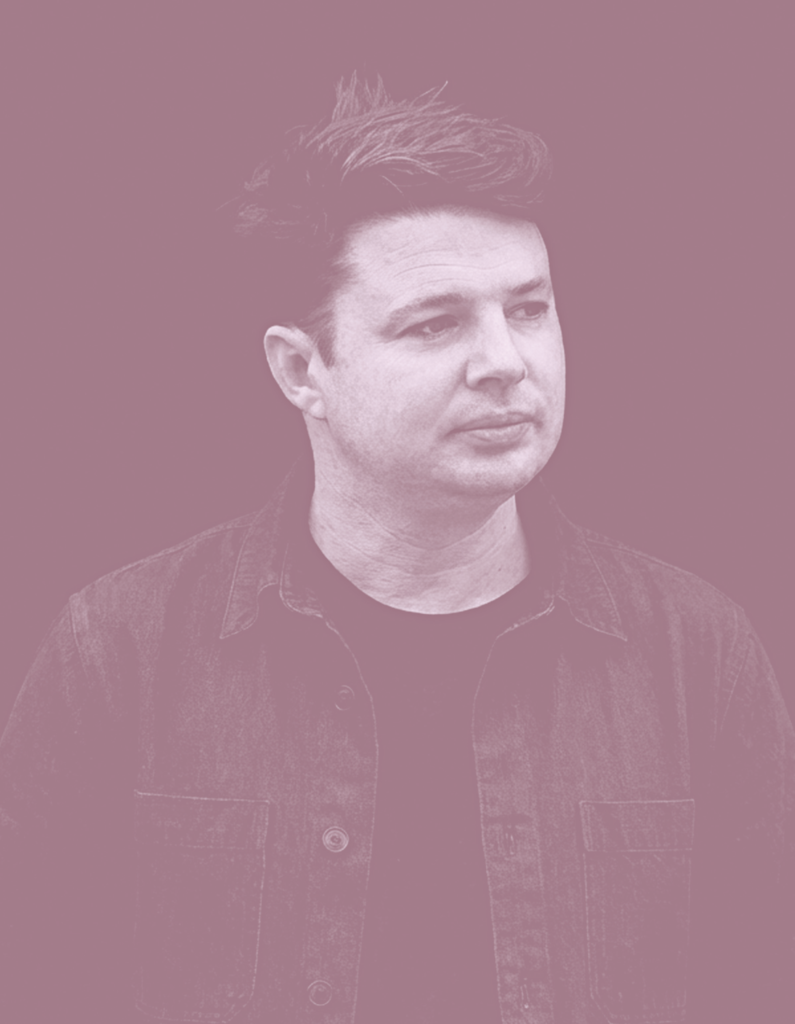
Kristoffer Negendahl is associate professor at Digital Building Technologies at DTU Construct. We sat for an hour with him for an honest conversation about what he thinks needs fixing in the digital construction industry, and he is unapologetically frank about what those things are.
Here are five hard truths he believes the industry must finally confront.
1. The industry keeps reinventing the wheel because it refuses to care about the data it already has
Negendahl is baffled by the obsession with building yet another “smart model” platform while ignoring the standards that already work.
“People don’t care about putting data in the right boxes with the right meaning.”
IFC has existed for decades, but tools, designers and contractors still insist on inventing their own naming, their own structure, their own ontology. The result? Models that look clever on screen but are useless to anyone else.
He believes the biggest problem in BIM is not complexity. It’s indifference.
2. Reuse could solve the climate crisis in construction, but only if we learn how to document the past
When Negendahl talks about sustainability, he doesn’t start with timber fantasies or futuristic materials. He starts with beams from the 1970s.
He argues that if we could safely reuse structural elements at scale, we would basically solve the climate problem of the building industry. The barrier isn’t engineering strength but missing documentation. How do you trust a 20-metre concrete deck with no original records? How do you certify it without destroying it? How do you track its chemical, structural and environmental properties?
His research focuses on generating the documentation that never existed, and making reuse a default rather than a novelty.
3. Bio-based materials aren’t automatically sustainable, and the industry is lying to itself about that
Negendahl pushes back on the simplistic idea that “wood equals good.” Cutting down a tree stops it from capturing CO₂. Importing timber from Brazil is hardly circular.
His view: bio-based materials only make sense if they come from renewable, annual crops with controlled regrowth, like hemp or other fast-growing biomass. This requires new knowledge about moisture, rot, fire, hygrothermal behaviour and long-term performance, all areas he actively researches.
Sustainability, in his words, is not ideology. It is documentation.
4. The reason BIM feels “specialist-only” is because our tools demand superhuman precision from ordinary people
He points out a simple truth: if using BIM requires you to construct a perfectly structured model with correct ontology, hierarchy, relationships, naming and data semantics, then of course only specialists can do it.
But that is a failure of tool design, not of people.
Negendahl doesn’t understand why a window manufacturer can’t simply insert their own product data into a model through a smart interface without needing Revit, a license, or months of training. He imagines a world where scripting, automating, and injecting information is normal, and where it is the tools that adapt to users, not the other way around.
5. Students already live in digital worlds, but without critical thinking, all the tech in the world means nothing
Kristoffer teaches hundreds of engineering students every year. And he says something striking:
“Students talk to ChatGPT as much as they talk to each other.”
He isn’t worried about intelligence. They are digitally native, they build in 3D from childhood, they navigate virtual spaces instinctively. What he worries about is critical thinking: the ability to understand a problem before asking a machine to solve it, to question an answer rather than accept it.
Digital tools don’t make people dumb, he says. But people who stop thinking will always be a risk, regardless of the technology.
The takeaway: stop chasing novelty, start fixing fundamentals
Across topics, from reuse and bio-based materials to BIM, ontology and student behaviour, Negendahl returns to one consistent theme: the construction industry jumps to new trends before mastering the basics.
“We don’t need new models, new frameworks, new standards every year. We need to use data correctly, document things consistently, and build tools that normal humans can actually use. Only then will digitalisation deliver the progress it has been promising for twenty years.”
This article originally appeared in ONSIGHT Magazine Issue #01 2026, the magazine for digital transformation in the construction industry, published by Vitus. Download the full magazine for free. More from ONSIGHT: We’ve Digitised Drawings, Not Decisions and Data Doesn’t Care About Your Gut Feeling.