When Anders Medin Feldbæk of Züblin A/S talks about construction, he rarely speaks in absolutes. His language is shaped by experience across climates, cultures, and project types where certainty is a luxury and adaptability a necessity. From -40° in Greenland to +40° in Australia, his career has been defined by logistics, scarcity, and the practical realities of getting buildings delivered under pressure.

From extremes to execution
Anders’ professional journey did not follow a linear path. Trained as a constructing architect and holding a master’s degree in project management, he spent more than a decade working internationally before settling into leadership roles. The environments he worked in were often defined by constraint rather than abundance. Materials were scarce. Supply chains fragile. Time windows narrow.
“In those conditions, logistics become the real challenge. Not the drawing, not the model, but getting the right material to the right place at the right time.”
That grounding still shapes how he views digitalisation today. While Denmark offers stability, structure, and access to advanced tools, he remains cautious about mistaking technological sophistication for real progress. Digital tools, in his view, only matter if they improve the core business of construction: building safely, efficiently, and with lasting quality.
Speed has arrived
Over the past two years, Anders has seen early-stage project development accelerate dramatically. What once took months can now be achieved in weeks. Automated design workflows, data-driven quantity take-offs, and generative modelling have reshaped how projects are evaluated from the earliest phases.
“Speed is no longer theoretical. It is already embedded in how we work.”
At Züblin A/S, early project development has become a strategic focus. Using structured data and modelling, teams can quickly assess development potential, test scenarios, and support clients in qualifying projects long before execution begins. This early clarity feeds directly into tendering, design, and construction.
But speed alone is not the goal.
“The risk is not that things move faster. The risk is that we forget what must not be rushed.”
Keeping the human in the loop
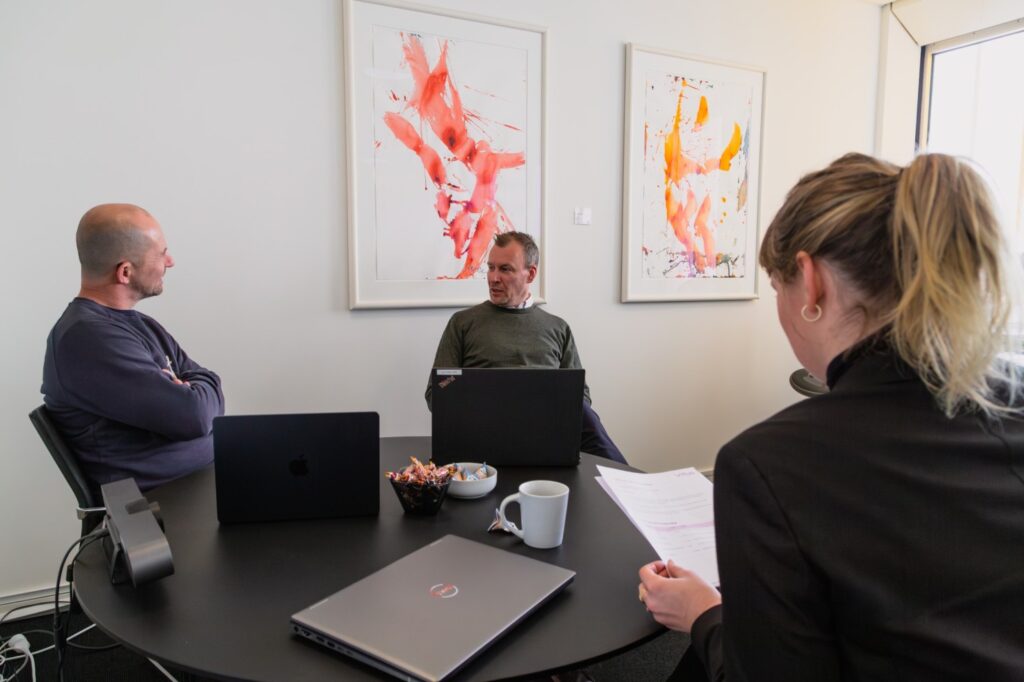
Despite the rapid adoption of automation, Anders is clear that construction is not on the verge of becoming a factory. Buildings remain complex, site-specific, and deeply human endeavours. Even the most advanced tools cannot replace judgement formed through experience.
“There will always be a human factor. And that is not a weakness. It is part of the quality.”
He draws a distinction between repetitive processes that should be automated and critical decisions that require contextual understanding. Engineering calculations may be assisted by algorithms, but accountability remains human. Architectural intent may be supported by generative tools, but meaning cannot be automated.
In leadership, this balance becomes even more important. Faster tools require clearer direction. Without it, organisations risk drowning in possibilities rather than making better decisions.
Data that reaches the site
One of Anders’ strongest convictions is that digitalisation must extend beyond offices and models and reach the construction site itself. Too often, data remains locked in systems that never translate into better execution.
To counter this, Züblin has focused on practical, site-oriented implementations. Communication has been moved away from fragmented email threads into shared digital platforms where decisions, clarifications, and documentation remain visible to all stakeholders.
“It changes behaviour. People make better decisions when they can see the full context.”
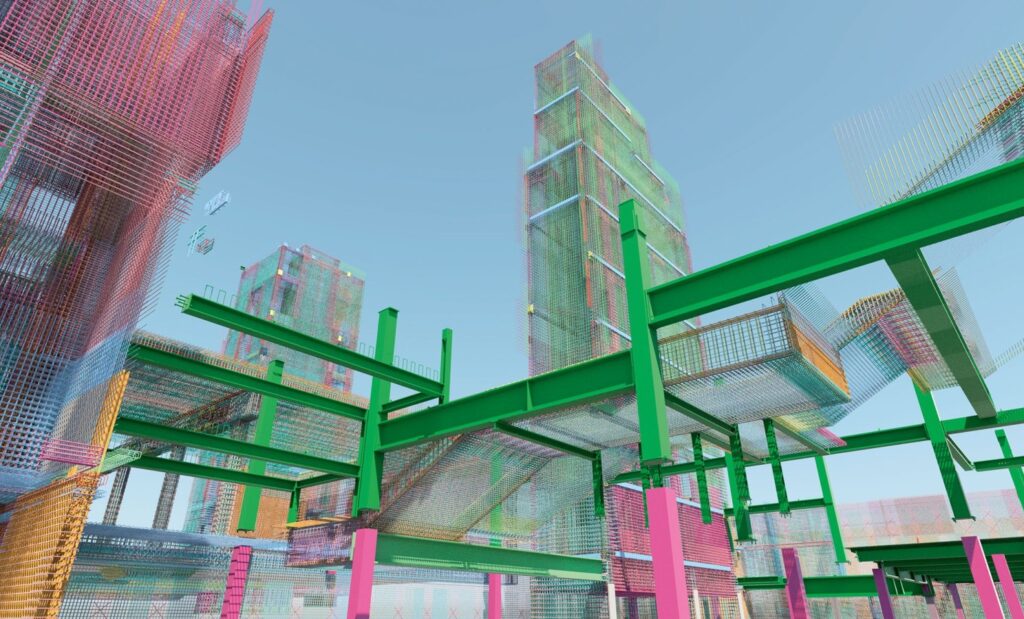
One concrete example is fire protection. A traditionally error-prone area, fire stopping has been integrated directly into digital models using plugins that identify locations, specify products, and guide installation. The result is not just better documentation, but fewer defects at handover.
“That is where digitalisation becomes meaningful. When it removes risk from everyday execution.”
Data, but not for data’s sake
Despite the growing volume of information available in modern construction, Anders believes the industry still uses only a fraction of it. Sensors, models, schedules, and operational systems generate enormous datasets, much of which remains untouched.
“The potential is huge. But access and structure are everything.”
He points out that many buildings already collect detailed operational data, yet only basic metrics such as energy consumption are actively used. The deeper insights about usage patterns, performance over time, or material behaviour rarely make it back into design and planning.
At the same time, he is cautious about the environmental footprint of digital infrastructure itself. Data storage, processing, and AI come with their own costs. For Anders, the challenge is to use data intelligently, not indiscriminately.
Strategy in a moving landscape
From a leadership perspective, Anders describes the current moment as a navigation challenge. The industry is pulled in multiple directions at once: technological opportunity, regulatory constraints, sustainability demands, and labour shortages.
“There is no single right path. The danger is trying to do everything at once.”
At Züblin, the strategic focus has been on early contractor involvement, supporting clients at the earliest development stages, and ensuring continuity throughout the value chain. A strong start, Anders believes, remains the best foundation for successful execution.
Equally important is building for operation. Delivering assets that support long-term performance, maintenance, and sustainability goals has become central to how projects are evaluated.
“A project does not end at handover. That is where its real life begins.”
The future he hopes for
Looking ahead, Anders does not predict a radical break from today’s construction industry. Instead, he sees gradual but meaningful shifts. Automation will continue to remove repetitive tasks. Data will improve decision-making. Processes will become faster and more integrated.
What he hopes for most is that this progress translates into reduced waste and lower environmental impact, particularly in material-heavy processes such as concrete construction.
“If we can solve that, we will have done something that truly matters.”
At the same time, he hopes the industry resists the temptation to reduce building to pure efficiency. Architecture, context, and human experience must remain central.
“The future of the industry lies not in choosing between speed and quality, but in learning how to hold both at once.”
This article originally appeared in ONSIGHT Magazine Issue #01 2026, the magazine for digital transformation in the construction industry, published by Vitus. Download the full magazine for free. More from ONSIGHT: Making Digital a Core Production Discipline and Some Bridges You Have to Build Twice.