From bold concepts to millimeter-precise builds
How Ultra uses Vitus to take ambitious ideas from sketch to site, connecting terrain, design and execution in a single shared environment, under the tightest timelines in the industry.
Ultra × Vitus, on set with Red Bull
A short look at how Ultra used Vitus to plan and build the "Above the Trees" scaffold ramp for Red Bull.
High-stakes builds in environments that don't forgive guesswork
Ultra started as a creator of sporting events, then evolved into a full-stack delivery partner spanning creative concepting, 3D modeling, build and breakdown. Every project is site-specific and public-facing, from city parks and beaches to forests and mountains, each with its own environmental, regulatory and safety constraints.
That work demands the speed of a creative agency and the precision of a structural contractor. For years, that tension was managed through hand sketches, spreadsheets and phone calls: it worked, until it didn't. Knowledge stayed locked in people rather than systems, misalignments surfaced on site where they are most expensive to fix, and most of what was learned disappeared once a project ended.
Knowledge locked in people
Designs, decisions and site knowledge lived in individuals, not in a shared system. When people weren't on site, the information wasn't either.
Misalignments found on site
Conflicts between design intent and physical reality appeared during execution, the costliest possible moment to discover them.
No version history or reuse
Past project data was hard to trace, hard to reuse and impossible to hand off systematically. Every build started from scratch.
Speed, precision, clarity. We're no longer guessing. We're working with live data from terrain and models.
How Ultra runs every project with Vitus at the center
Ultra rebuilt their entire project workflow around Vitus in one shared environment used by designers, project managers, field crews and partners, from first feasibility check to final breakdown.
R&D & scoping
Feasibility checks start in Vitus using context models and early terrain data. Constraints, deadlines and site conditions are mapped before a single element is designed.
Concept & design
In-house design shifts from idea to 3D fast. Engineers and specialists plug into the same environment. Early models align client expectations before commitments are made.
Detail & sign-off
Budget, scope and deadlines are locked against the approved model. Previous design options are kept in Vitus to reuse elements and trace decisions across future projects.
Execution & on-site
Crews build directly from Vitus on iPad and phone. The designer doesn't need to be present. GPS and laser layout hits Vitus reference points with millimeter precision when the venue demands it.
One model, terrain, design and execution in the same view
From the first terrain import to the last component placed on site, Ultra's entire project lives inside Vitus. Designers, project managers and field crews see the same geometry updated in real time, accessible on any device.
Red Bull "Above the Trees," Germany
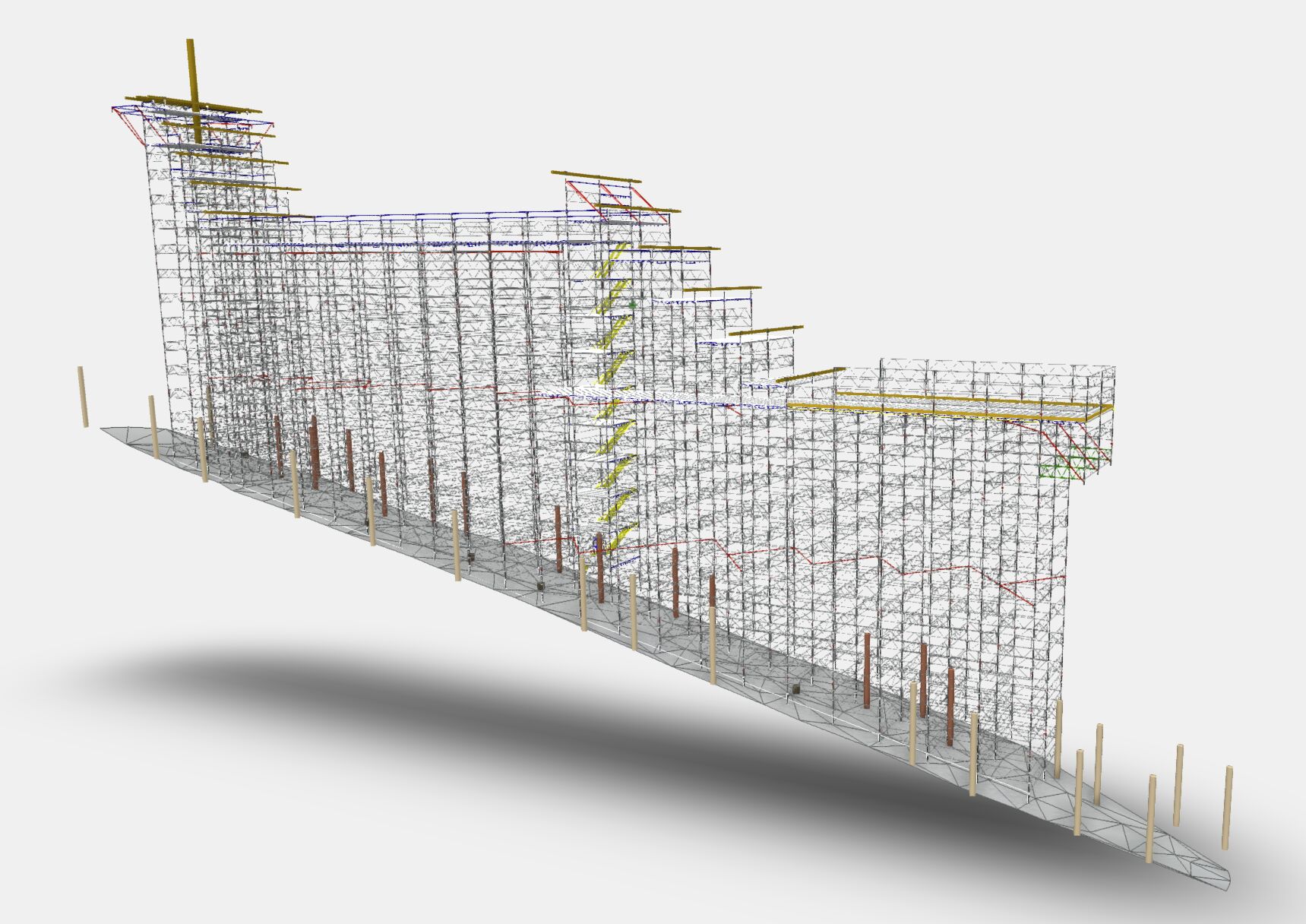
A BMX rider. A forest on a downslope. The brief: make it look like he clears the treetops. The deadline: three weeks from first call. Ultra imported the terrain and real tree positions into Vitus, designed a freestanding scaffold ramp adapted to the actual slope, and deployed two project managers on site with Vitus open on laptops and iPads. Ten technicians built from both ends simultaneously, coordinated entirely through the model.
The final Red Bull video
What started as a forest, a slope and a three-week window became one of Red Bull's most distinctive athlete media productions. Every centimeter of the scaffold ramp was built from a single Vitus model.
We're working live with data. Terrain and design together. That makes budgeting more accurate, execution faster and alignment easier.
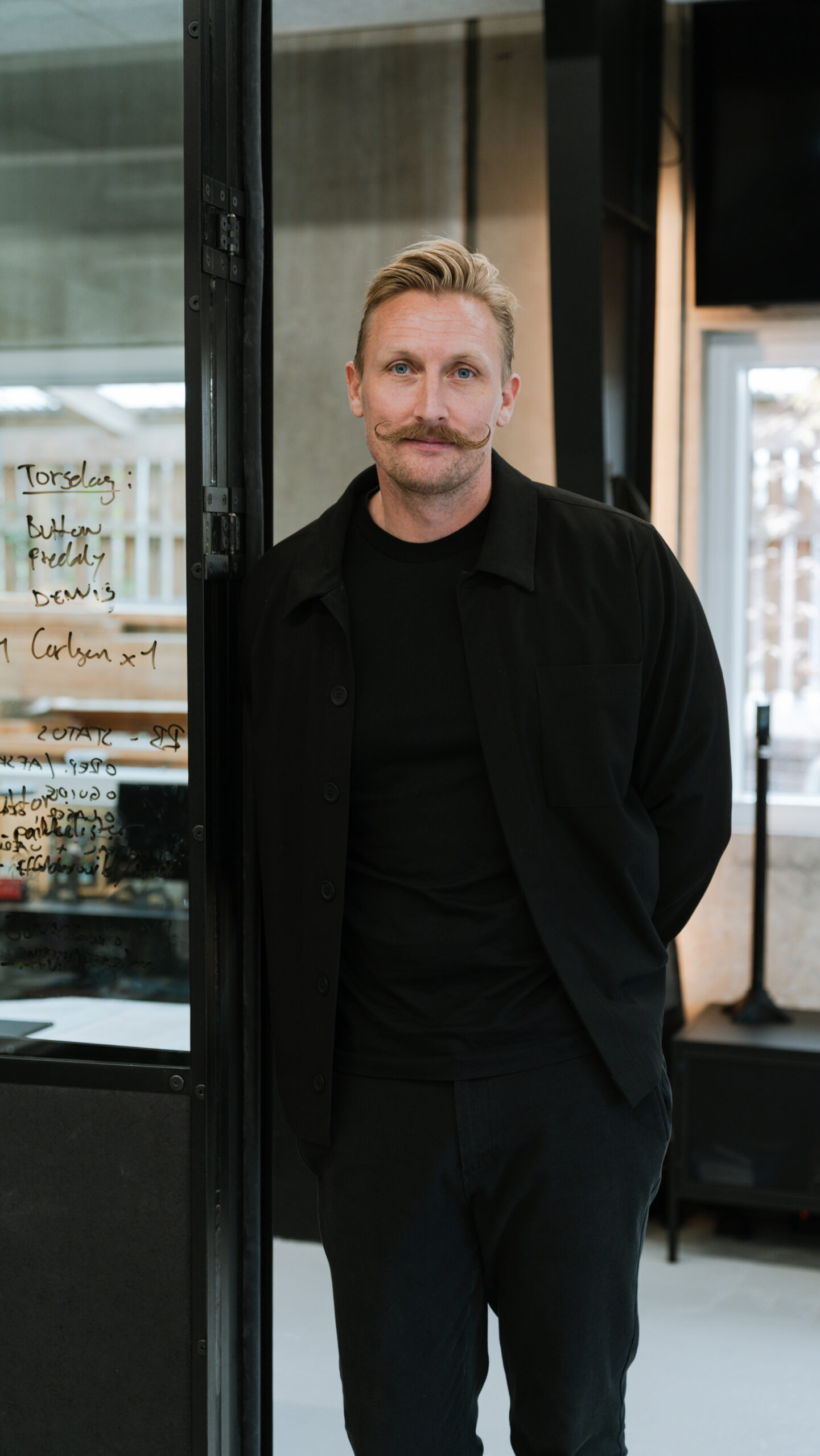
We didn't go looking for Vitus. We rebuilt the company around it.
Ultra began with Copenride, a freestyle BMX event co-developed with Red Bull, where natural terrain didn't exist and had to be built from scratch: steel, scaffolding and wood, engineered to simulate a landscape. That project cemented Ultra's hybrid role as both creative studio and technical contractor.
When Ultra found Vitus, they weren't looking for software. They were looking for a way to keep up with the ambition of their projects. What they discovered was a single environment where terrain, model and execution could finally speak the same language.
"We didn't go looking for Vitus. We stumbled onto it, and then rebuilt the company around it."
What Ultra learned, and what it means for project-driven teams everywhere
Speed comes from resolving conflicts in the model
Complex builds go up days or weeks faster when every conflict is found and fixed in Vitus, not discovered during execution. The model absorbs the chaos so the site doesn't have to.
Precision is built in, not measured after
GPS and laser layout tied to Vitus reference points delivers centimeter-level accuracy from model to terrain. Component counts and placements are verified before a single piece leaves the workshop.
Clarity replaces presence
When everyone, from designers and technicians to partners and clients, references the same geometry and data, the need for constant physical coordination disappears. The model is always there, even when people aren't.
Confidence accelerates approvals
Early 3D alignment reduces rework and speeds up client sign-off. Crews arrive at site ready to build, not to measure, negotiate and re-plan. That shift alone transforms project economics.
Ready to run your projects with the same precision and speed as Ultra?
Vitus connects terrain, design and execution in a single shared environment for every member of the team, at every phase of the project, whether you're building a BMX ramp in a forest or a stadium on a waterfront.
Talk to us